
Musculoskeletal Pain? Relief Today in Great Neck
Definition:
Musculoskeletal pain can make ordinary life harder than it should be. Sitting through a workday becomes uncomfortable. Getting out of bed takes longer. Driving, commuting, exercising, carrying groceries, or even turning your head may start to hurt.
TL;DR:
Musculoskeletal pain affects structures such as muscles, joints, bones, tendons, ligaments, fascia, and sometimes nearby nerves. It may develop after an injury, repeated strain, poor posture, long periods of sitting, arthritis, or other health condition.
If your pain has lasted for weeks, keeps returning, or limits normal activity, getting evaluated can help you stop guessing about what to try next.
Table of Contents
What Is Musculoskeletal Pain and Why Are You Still Dealing With It?
Musculoskeletal pain is pain that comes from or affects the body’s movement-related structures, including muscles, bones, joints, tendons, ligaments, fascia, and surrounding tissues.
It can feel like an ache, stiffness, burning, tightness, soreness, tenderness, throbbing, sharp pain, or reduced range of motion. Some people have pain in one specific area, while others experience symptoms across several regions.
Musculoskeletal pain may be acute, meaning it started recently, or chronic, meaning it continues for three months or longer. Pain may also be classified by the system producing it, such as nociceptive pain related to tissue irritation, neuropathic pain involving nerves, or nociplastic pain involving changes in how the nervous system processes pain.
What Are the Most Common Types of Musculoskeletal Pain?
Musculoskeletal pain is an umbrella term rather than one disease. It includes many conditions affecting different parts of the body.
Common examples include:
- Low back, neck, shoulder, knee, and hip pain
- Muscle strains, ligament sprains, tendinitis, and bursitis
- Sciatica, repetitive strain injuries, and myofascial pain
- Arthritis-related pain, joint stiffness, muscle spasms, and some forms of widespread pain
The research brief for Great Neck also identifies chronic low back pain, neck pain, knee osteoarthritis, shoulder pain, hip pain, fibromyalgia, degenerative disc problems, carpal tunnel syndrome, and device-related cervical strain as relevant musculoskeletal conditions.
Why Does Musculoskeletal Pain Keep Coming Back?
Musculoskeletal pain often returns when the factor irritating the area has not changed.
Imagine someone who treats neck pain with medication but spends another eight hours the next day leaning toward a laptop. The medicine may reduce discomfort temporarily, but the mechanical stress continues.
What Are Your Treatment Options for Musculoskeletal Pain?
Treatment for musculoskeletal pain depends on the cause, duration, severity, and effect on daily function.
Common options include exercise therapy, physical therapy, acupuncture, manual therapy, medication, hot or cold therapy, stretching, strengthening, massage, chiropractic care, and, in selected cases, injections or other medical procedures.
The goal should not be to collect as many treatments as possible. It should be to choose treatments that match the problem.
When Should You Choose Acupuncture Over Physical Therapy or Medication?
Acupuncture may make sense when pain has persisted, keeps returning, limits normal movement, or has not responded well enough to basic self-care.
Physical therapy may be particularly useful when rehabilitation requires progressive strengthening, movement retraining, balance work, mobility exercises, or recovery after injury or surgery. Medication may help manage symptoms in appropriate situations, especially during short-term flare-ups.
How Does Acupuncture Treat Musculoskeletal Pain?
Acupuncture is a treatment in which a licensed acupuncturist inserts very thin needles into selected points on the body.
For musculoskeletal pain, acupuncture is commonly used as a non-drug treatment aimed at reducing pain perception, influencing pain pathways, relaxing painful muscle areas, and supporting movement and function.
What Happens Inside Your Body During Acupuncture?
Needle stimulation sends sensory signals through the nervous system. Researchers study how this stimulation affects pain-processing pathways in the spinal cord and brain.
One area of research involves endogenous opioid peptides, compounds produced naturally by the body that participate in pain regulation. Endorphins, enkephalins, endomorphins, and dynorphins are examples.
What Is Electroacupuncture and When Is It Used?
Electroacupuncture is a form of acupuncture in which a small electrical current passes between selected acupuncture needles.
The stimulation is controlled and may be used for persistent musculoskeletal pain when a practitioner wants a steady level of stimulation that differs from manual needle manipulation.
What Can You Do at Home to Support Musculoskeletal Pain Treatment?
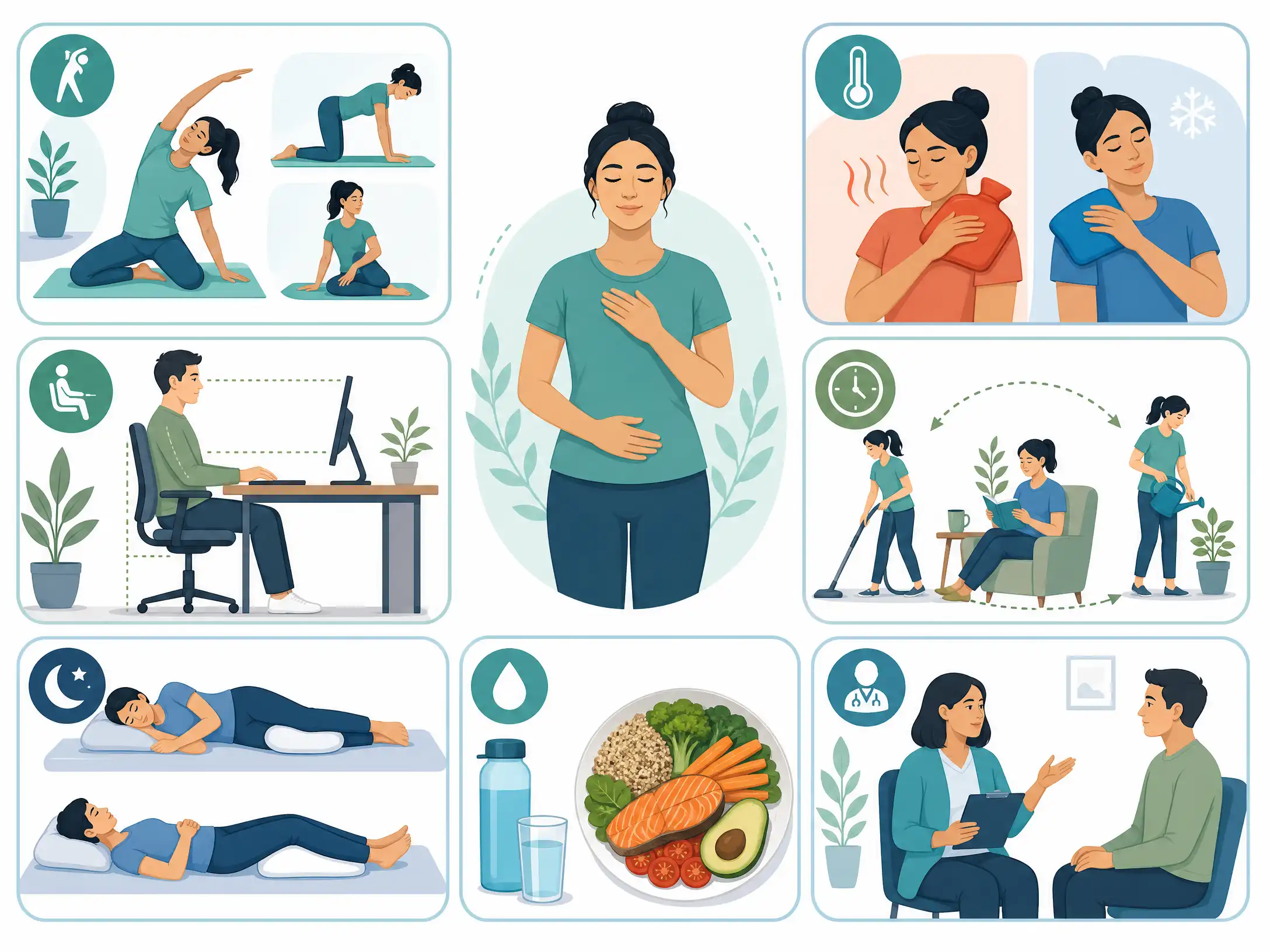
Self-care works best when it matches the condition rather than following a one-size-fits-all routine.
Helpful habits may include:
- Change positions regularly during long work or commuting periods.
- Use gentle movement or stretching that does not sharply increase symptoms.
- Review desk height, screen position, chair support, and repetitive work habits.
- Protect sleep and recovery because poor sleep can increase pain sensitivity.
Stress management can also matter. Stress may increase muscle tension, disrupt sleep, and affect how strongly the nervous system processes pain. That does not mean pain is “just stress.” It means physical and nervous-system factors can interact.
What Should You Expect at Your First Musculoskeletal Pain Appointment?
A first appointment should begin with assessment rather than immediate assumptions about the cause of your pain.
At Tara Acupuncture in Great Neck, the visit may include discussion of where the pain occurs, when it started, what makes it better or worse, previous injuries, medical history, treatment history, activity limitations, and your goals.
How Many Acupuncture Sessions Will You Need for Relief?
There is no universal number of acupuncture sessions that works for every musculoskeletal condition.
A recent muscle strain, long-standing low back pain, knee osteoarthritis, and chronic widespread pain are very different problems. Treatment frequency may depend on how long you have had symptoms, your pain intensity, your health history, your response after early sessions, and your functional goals.
Does Insurance Cover Musculoskeletal Pain Treatment in Great Neck?
Insurance may cover acupuncture for some musculoskeletal conditions, but benefits depend on the specific policy, diagnosis, provider network, and treatment rules.
The Great Neck research identified NYSHIP, the Empire Plan, Aetna, UnitedHealthcare, Empire BCBS, Medicare for qualifying chronic low back pain, New York no-fault insurance, Workers’ Compensation, and HSA/FSA payment options as relevant coverage topics.
Never assume coverage based only on the insurance company’s name. Two people with plans from the same insurer can have different acupuncture benefits.
Does NYSHIP or the Empire Plan Cover Acupuncture in Great Neck?
Some NYSHIP and Empire Plan members may have acupuncture benefits, but coverage should be verified for the individual policy before treatment.
When Should You See a Professional for Musculoskeletal Pain?
You should consider professional evaluation when musculoskeletal pain continues, repeatedly returns, limits normal activity, or does not improve with reasonable self-care.
Seek prompt medical care when pain follows significant trauma or appears with symptoms such as major weakness, progressive numbness, loss of bladder or bowel control, chest pain, trouble breathing, high fever, unexplained severe swelling, or other sudden concerning symptoms.
FAQ's

What is the fastest way to relieve musculoskeletal pain?
The fastest relief depends on the cause, but gentle movement, heat or cold, activity changes, and proper treatment can help reduce symptoms.
Does acupuncture help musculoskeletal pain?
Yes, acupuncture may help reduce musculoskeletal pain by affecting pain pathways, muscle tension, circulation, and nervous-system activity.
Is acupuncture better than physical therapy for muscle and joint pain?
Neither is always better; acupuncture may help with pain relief, while physical therapy focuses more on strength, mobility, and rehabilitation.
Can sitting all day cause musculoskeletal pain?
Yes, prolonged sitting can contribute to stiffness, muscle tension, back pain, neck pain, and other musculoskeletal problems.
Should I use heat or ice for musculoskeletal pain?
Ice may help some recent injuries, while heat may be better for muscle tightness and stiffness, depending on the condition.
Can stress cause muscle and joint pain?
Yes, stress can increase muscle tension, disturb sleep, and increase pain sensitivity, which may worsen muscle and joint pain.
How long should musculoskeletal pain last before I see a provider?
See a provider if pain lasts more than a few weeks, keeps returning, worsens, or begins limiting normal daily activities.
Take the Next Step
Musculoskeletal pain can affect how you work, sleep, exercise, commute, and handle everyday activities. While mild pain may improve with movement changes, rest, heat or cold, ongoing or recurring pain often needs a more targeted approach.
Treatment may include acupuncture, physical therapy, exercise, medication, or a combination based on the cause of your symptoms. For people in Great Neck looking for a drug-free option, acupuncture may help reduce pain, ease muscle tension, and support better movement.
