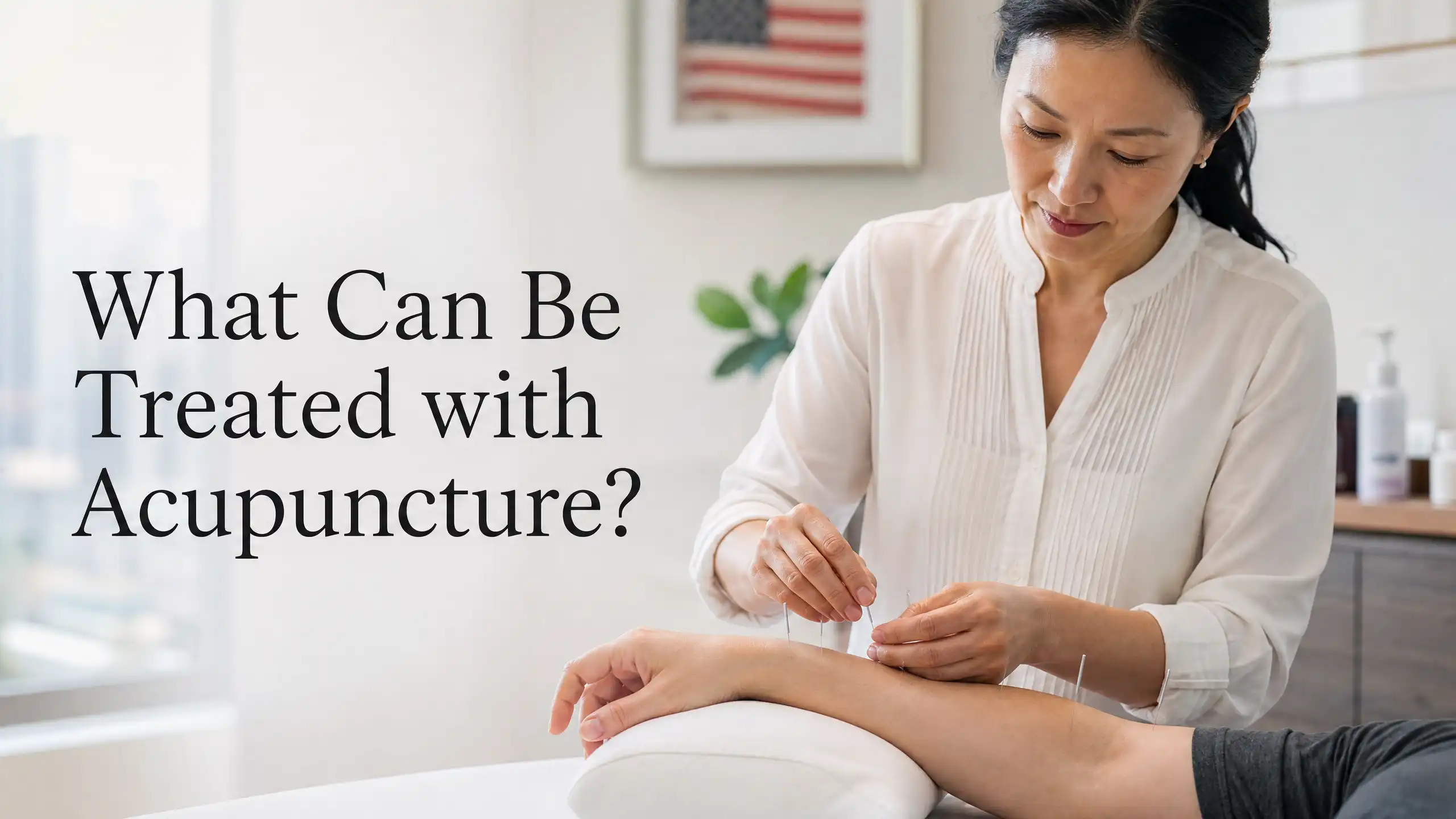
What Can Be Treated With Acupuncture? 50+ Conditions Backed by Research
Definition:
Acupuncture is a treatment approach from Traditional Chinese Medicine (TCM) that uses thin, sterile needles placed at specific points on the body to stimulate the nervous system, support pain regulation, and help manage certain health conditions.
TL;DR:
Acupuncture is most widely studied for pain-related conditions, including back pain, neck pain, knee osteoarthritis, and headaches. It is also used as a complementary treatment for concerns such as stress, sleep problems, digestive discomfort, women’s health issues, allergies, and recovery support.
Research from the National Center for Complementary and Integrative Health (NCCIH) shows that acupuncture may provide benefits for several chronic pain conditions, although results vary depending on the condition and individual response.
Table of Contents
How Does Acupuncture Work in the Body?
Acupuncture works by stimulating specific points on the body with very thin needles. Traditional Chinese Medicine explains this through concepts such as Qi and meridians, while modern research focuses on how acupuncture affects the nervous system, brain activity, muscles, and the body’s natural pain-control mechanisms.
When acupuncture needles stimulate the body, they may influence nerve signals, encourage the release of natural chemicals such as endorphins, and affect processes linked with pain and inflammation.
This is why acupuncture is used for many different conditions. It does not simply target one painful area; it interacts with systems involved in how the body experiences pain, stress, and recovery.
What Happens When Acupuncture Needles Are Inserted?
During acupuncture treatment, a licensed practitioner places sterile needles into selected points based on the patient’s symptoms and health goals. Most people feel little discomfort because acupuncture needles are much thinner than standard medical injection needles.
The stimulation from the needles sends signals through the nervous system. The body may respond by relaxing muscles, changing pain perception, and supporting natural recovery processes.
Why Can Acupuncture Help Different Health Conditions?
Many health problems involve the nervous system, stress response, inflammation, or muscle tension. Since acupuncture affects these pathways, it may support different areas of health.
For example, chronic pain is not only caused by an injury. The brain and nervous system also influence how strongly pain is felt. Acupuncture may help regulate these signals, which explains why it is studied for several pain conditions.
What Pain and Musculoskeletal Conditions Can Acupuncture Treat?
Pain is one of the most researched areas of acupuncture. Studies suggest acupuncture may help manage several musculoskeletal conditions, especially when combined with other appropriate treatments such as exercise, physical therapy, or medical care.
Common conditions include:
- Chronic low back pain
- Neck and shoulder pain
- Knee osteoarthritis
- Sciatica
- Fibromyalgia
- Sports-related injuries
Can Acupuncture Treat Chronic Back Pain?
Yes, acupuncture may help reduce chronic low back pain and improve daily function for some people. Research has found benefits compared with no treatment, and it is included as a non-drug option in some clinical guidelines for chronic low back pain.
People often choose acupuncture for back pain because it offers a drug-free approach that can be combined with other treatments.
Does Acupuncture Help Neck and Shoulder Pain?
Acupuncture may help reduce neck and shoulder discomfort caused by muscle tension, posture problems, overuse, or chronic pain conditions.
Many people develop neck and shoulder tension from desk work, repetitive movements, stress, or injuries. Acupuncture may help by influencing muscle relaxation and changing how the nervous system processes discomfort.
Can Acupuncture Help Knee Osteoarthritis?
Acupuncture may provide relief for knee osteoarthritis symptoms by reducing pain and improving mobility.
Osteoarthritis occurs when the protective cartilage inside a joint wears down over time. While acupuncture does not rebuild damaged cartilage, research suggests it may help people manage pain and maintain activity levels.
Can Acupuncture Help Headaches, Nerve Problems, and Neurological Conditions?
Acupuncture is commonly used for headaches and certain nerve-related conditions because it can influence nervous system activity and pain signals.
Research has explored acupuncture for migraines, tension headaches, neuropathy, and other neurological concerns.
Can Acupuncture Reduce Migraines?
Yes, acupuncture may help reduce migraine frequency and headache severity for some people.
Migraines involve complex interactions between nerves, blood vessels, and brain signalling. Acupuncture may support migraine management by affecting pain pathways and reducing factors that contribute to headache symptoms.
Can Acupuncture Help Neuropathy?
Acupuncture may help some people manage symptoms of peripheral neuropathy, including tingling, numbness, and burning sensations. Neuropathy occurs when nerves become damaged or irritated. Acupuncture may support symptom relief by stimulating nerves and improving circulation around affected areas.
Can Acupuncture Help Stress, Anxiety, and Sleep Problems?
Acupuncture is often used as a complementary approach for stress-related concerns because it interacts with the nervous system’s relaxation response. Modern lifestyles can keep the body in a prolonged stress state, affecting sleep, mood, muscle tension, and overall wellbeing.
Does Acupuncture Help Anxiety and Depression?
Acupuncture may help reduce symptoms linked with anxiety and depression when used alongside appropriate mental health care. Research suggests acupuncture may influence neurotransmitters involved in mood regulation, including serotonin and dopamine. However, it should support—not replace—professional mental health treatment.
Can Acupuncture Improve Sleep?
Yes, acupuncture may help some people improve sleep quality by reducing stress, calming the nervous system, and addressing factors such as pain that interfere with rest. People commonly seek acupuncture for insomnia, frequent waking, and stress-related sleep problems.
What Digestive and Women’s Health Conditions Can Acupuncture Support?
Acupuncture is used for several digestive and women’s health concerns because the nervous system plays an important role in digestion, hormones, and reproductive health.
Can Acupuncture Help IBS and Digestive Problems?
Acupuncture may help some people manage digestive symptoms such as bloating, discomfort, and IBS-related issues. The gut and brain communicate constantly through the nervous system. By influencing this connection, acupuncture may support digestive balance and stress regulation.
Can Acupuncture Support Fertility?
Acupuncture may support fertility care by helping manage stress, improving relaxation, and supporting overall reproductive wellbeing. Some people use acupuncture alongside fertility treatments such as IVF, but it should be considered a complementary approach rather than a replacement for medical fertility care.
Can Acupuncture Help Menopause Symptoms?
Acupuncture may help some women manage menopause-related concerns such as hot flashes, sleep problems, and stress. Hormonal changes during menopause affect many body systems, and acupuncture may support symptom management through nervous system regulation.
Can Acupuncture Help Allergies, Skin Conditions, and Recovery?
Acupuncture may also be explored for immune-related symptoms, skin concerns, and recovery support. Some conditions studied include allergic rhinitis, eczema symptoms, acne-related inflammation, and sports recovery.
Can Acupuncture Help Allergies?
Yes, acupuncture may help reduce allergy symptoms such as nasal congestion and sneezing for some people. Research has examined acupuncture for allergic rhinitis and found potential benefits in symptom reduction and quality of life.
What Is Facial Rejuvenation Acupuncture?
Facial rejuvenation acupuncture is a cosmetic approach that uses acupuncture points on the face and body to support circulation, skin health, and natural repair processes. It is often chosen by people looking for a non-surgical option to support skin appearance.
What Does Research Say About Acupuncture?
Tara Acupuncture in Great Neck, NY provides acupuncture care based on each patient’s symptoms, health history, and goals.
Treatment approaches may include traditional acupuncture, electroacupuncture, cupping, Gua Sha, Tui Na, and facial rejuvenation acupuncture.
A personalised assessment helps determine which techniques are most suitable and how treatment should progress over time.
FAQ's

Does acupuncture hurt?
Most people experience little discomfort because acupuncture needles are extremely thin and may create only mild sensations such as tingling or pressure.
Is acupuncture safe?
Acupuncture is generally safe when performed by a licensed practitioner using sterile, single-use needles.
How many acupuncture sessions do I need?
The number of sessions depends on your condition, symptoms, health history, and how your body responds to treatment.
Does insurance cover acupuncture?
Some insurance plans cover acupuncture, but coverage depends on your provider, location, and medical condition.
Can acupuncture replace medication?
Acupuncture should not replace prescribed medication, but it may be used alongside conventional medical treatment.
What happens during the first acupuncture visit?
Your first visit usually includes a health assessment, discussion of symptoms, and a personalised treatment plan.
Final Thoughts
Acupuncture may help support many health concerns, from chronic pain and headaches to stress, digestive issues, women’s health, and recovery.
The best way to understand whether acupuncture is suitable for your situation is to consult a qualified acupuncturist who can review your symptoms and recommend an appropriate approach. When combined with proper medical care, acupuncture can be a valuable option for people looking for a personalised and evidence-informed approach to health management.